Introduction
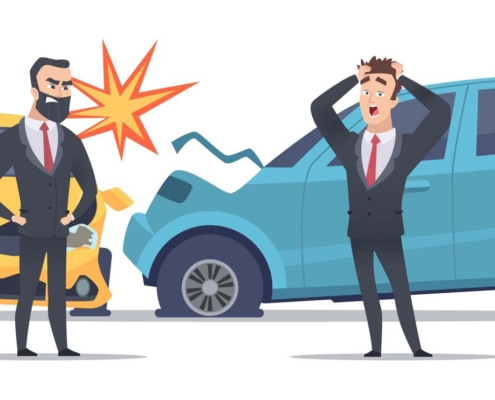
The concern of increased car insurance premiums after an accident is one of the top stressors of many California drivers. It is natural that the insurance rate for at-fault drivers will increase. What if the driver is not at fault?
Your insurance rates won’t always increase when you file a claim for causing an accident. Insurance companies vary from one another. After an accident, the premiums of policyholders are increased by certain companies but not by others. Depending on your driving history, the type of collision, and the insurance company you have a policy with, your insurance may increase following an at-fault collision.
Based on the research, if your premiums are raised by the insurer, they will probably remain high for three years. You can, however, take certain steps to reduce the expense of your premiums. For example, the insurance company may decide to return the rates to their prior level if you are accident-free or have no moving violations for a predetermined amount of time.
After an accident, by how much does auto insurance increase?
You would most certainly see an increase in your insurance rate if you are found at fault for an accident. National statistics for 2025 indicate that following an at-fault collision, drivers may anticipate an average rise in auto insurance of up to 49% (Source: Bankrate & ConsumerShield).
Many drivers ask, “How much will my insurance go up with an at-fault accident?
Because California has higher living expenses and more traffic, this rate increase can often be more pronounced there. Given the new liability legislation, it is anticipated that the mean percentage for 2026 will be substantial, even though a precise figure is still being determined. There are other factors that determine how much your insurance will increase.
- Your insurance provider: Risk is evaluated differently by each organization. For the same kind of incident, rates may climb by 30% for one provider and more than 70% for another.
- Accident Severity: Your premium is going to be less affected by a modest car accident than by a severe collision that causes substantial property damage and serious injuries.
- Your History of Driving: The increase will probably be less for a driver having a spotless record than for one with a history of collisions or moving infractions. Teenage insurance rates frequently experience the most significant hikes following an accident.
- Accident Forgiveness: Several insurance companies offer “accident forgiveness” after an initial at-fault collision. It might stop your premium from rising.
Your records usually reflect this increase, which has an impact on your rates for between three and five years. Ultimately, the answer to “How much will my insurance go up with an at-fault accident?” depends on many factors.
California’s New Minimum Insurance Standards for 2025
2025 saw the implementation of a significant change that affects all drivers in the state. California raised the minimum liability insurance requirements for the very first time in years.
These are the updated minimums.
- $30k (up from $15k) for one person’s death/serious harm.
- $60k (raised from $30k) for multiple fatalities or serious injuries sustained in a single accident
- $15k (increased from $5k) for property damage.
This adjustment was designed to improve financial security. They take into consideration the growing expenses of auto maintenance & medical treatment. This boosts security. It also raises risk for insurance companies. It will probably result in higher rate hikes following at-fault incidents.
I Didn’t Cause the Accident: Will The Insurance Increase?
There are regulations in California that specifically safeguard drivers in this circumstance. Proposition 103 states that an insurer cannot lawfully increase your accident premium provided you were “primarily at fault,” which means you were at least 51% at fault.
Your insurance rate shouldn’t go up if the other driver was solely at fault. California is a state that practices true comparative negligence, nevertheless. This implies that blame can be shared. Should you be judged to be 20% at fault, for example, your insurance company may be able to defend a rate hike.
Insurance rate coming back to normal
Another common concern tied to “How much will my insurance go up with an at-fault accident?” is how long the increase will last.
There is no time limit on when insurance prices will return to normal. However, the norm is that your rates are going to be lower depending on how long it has been since you experienced a car crash and submitted a claim.
After a crash, rates usually increase right away before stabilizing in between three and five years. Again, though, this only holds true provided you don’t submit any more claims throughout that period. Your premiums will take longer to drop, and you’ll probably see more rises if you do make another claim or get into another accident.
Fortunately, there are strategies for drivers who want to reduce their rates. Again, there are a lot of unique elements that might affect your policy rate, so these are not infallible. On average, though, these can be useful.
How to reduce auto insurance after a collision:
- Look around to find the best deals. Insurers are not all the same. It’s important to do your homework & explore various insurance companies.
- Make deductible adjustments. Lower deductibles are risky because they increase your out-of-pocket costs in the event of an emergency. However, your premiums will at least be reduced.
- Reduce the amount of coverage you have. In the same way that lowering your deductible will lower your rates, so too will lowering your main coverage amounts. Be sure to adhere to the minimum coverage criteria set forth by your state.
- Improve your credit rating. Policyholders with good credit may be eligible for reduced premiums from some insurance companies. Not all insurers will accept this, but it’s a possibility.
Lesser-known methods for reducing insurance costs
If you are still worried about “How much will my insurance go up with an at-fault accident?”, there are practical ways to minimize the impact.
A lot of data is used by auto insurance providers to determine your rates. Where you live, your credit score, and possibly your occupation might influence premiums in addition to your driving history. However, there are also undiscovered ways to save money.
Find out about any discounts from your insurance company. Even while they don’t always market it, many businesses provide additional savings than you may imagine. For instance, you can be eligible for savings if you don’t often drive your car or if it has safety features.
Another way to save money is to combine your auto insurance with a different coverage, such as homeowner’s insurance. Some discounts to look into are:
- If you do not travel far, you can get a low mileage discount.
- Discount for equipping your vehicle with tracking or anti-theft gear.
- Savings for avoiding accidents for a predetermined amount of time.
- After an accident, these discounts can drastically cut the profit, but they don’t completely eliminate it.
Sometimes, the most effective way to save dollars after an accident is to search around for a different insurance company. Accidents are not always given the same weight by insurance. A significant rate rise at one organization could have a less significant impact at another.
A Real-World Example of a California Auto Accident Settlement
Finding the appropriate lawyer can significantly impact your recovery. $525,000 Auto Accident Compensation: A woman from the Bay Area was seriously hurt in a fast rear-end collision. Her rehabilitation was drawn out and unpleasant, and her medical expenses came to about $1 million.
Leading the charge and obtaining a $525,000 payout was the skilled California auto accident settlement team of Personal Injury Lawyers. She received more than $300k after her medical bills were covered. She has recovered and is now fully enjoying life.
Important Guidelines to Adhere to Following an Accident
You must safeguard your safety and rights. Being aware of how to respond following an accident is important.
- Stay safe. Try to get to a safe place. Attend to injuries.
- Report the incident. Report the crash to the authorities. A police report is a valuable form of proof. You must also report any crash that results in injury or death. Property damage in excess of $1,000 to the DMV within 10 days using the SR-1 form. It is available on the DMV’s website.
- Provide information. Get the other driver’s details.
- Keep a record. Take photos & videos of the crash scene. Any injuries you can see, damage to vehicles, & road conditions should be recorded. Get the contact details of witnesses by speaking with them.
- Seek medical attention. Seek medical attention even if you’re feeling well. The symptoms of some severe injuries take time to manifest.
- Speak with an automobile accident attorney. A knowledgeable personal injury lawyer should be consulted before interacting with any insurance adjusters. An attorney can manage correspondence with insurers and shield you from saying anything that would undermine your claim.
Talking to an Insurance Adjuster Following an Accident
After an automobile accident, you can consult your insurance adjuster or an automobile accident lawyer with any queries you may have concerning your coverage. Just remember that the insurance company may use it against you if you confess to any wrongdoing.
The following are some pertinent questions to pose:
- Will you increase my charges?
- How significantly will an accident raise my rates?
- Could you lower my rates through your safe-driving program?
- How am I paid for my claim?
- Will you provide me with “index” information about my claim or copies of the relevant documents so I can confirm my rate?
The Insurance Company Can Be Managed by a Personal Injury Attorney
After an accident, you will inevitably have to deal with the insurance company. These businesses will sometimes do all in their power to refute or minimize claims. Working with an injury lawyer, however, can allow them to handle the insurance company while you recover from the accident.
They are able to:
- Create and submit a demand note to the insurance provider.
- Determine the total cost of your accident-related outlays.
- Take care of all discussions.
- Examine your insurance coverage’s specifics.
- Calculate your share of the accident’s blame.
- Protect yourself against unethical insurance tactics.
Your lawyer can also tell you if your insurance rates will go up due to a collision you caused. Having an attorney after a car accident can assist you in advancing your legal interests, but it is not necessary.
FAQs
1. For what length of time does an accident impact your California insurance?
Your insurance rates will usually be affected by an at-fault collision for three to five years. Following this safe driving phase, your rates ought to drop.
2. Why did my auto insurance increase in the absence of an accident?
Rates may rise for a number of causes unconnected to your driving. The statewide rise in minimum coverage for liability is one of the main causes for a lot of Californians. Some other factors include a spike in claims in your ZIP code area or a general rise in costs for auto repairs.
3. Will the insurance rates go up if I report a hit and run?
In general, no. Normally, your collision coverage, or your uninsured driver coverage, will cover a hit and run. Proposition 103 bars your insurer from raising your premium for the incident because you are not at fault (Consumer Watchdog).
4. What’s the rise in the insurance rates after a small accident?
Your insurer & driving history will still determine the precise amount, but a minor crash is going to result in a lesser hike than a severe one. The most important factor is whether you happen to be at fault, and a claim is made.