Introduction
Many things can cause back injuries. Anything from wear and tear to injury of the muscles, bones, or other tissues in the back can cause it. Sprains and strains, herniated discs, & fractured vertebrae are typical back injuries. A frequent site of back pain is the lumbar spine. Because of the flexibility and the kind of body weight it frequently supports, the area is vulnerable. It is estimated that 80-90% of Americans have had a lower back injury or pain.
Important facts
- Although back injuries may impact any area of the back, they typically affect the lower back.
- Pain and suffering may result from them.
- The likelihood of a back injury is increased by numerous risk factors.
- The most important step is to continue being active because the majority of mild back injuries heal spontaneously.
- A healthy way of living can help avoid some back issues.
A back injury: what is it?
Injuries to the back are fairly prevalent. Your back is injured when it’s damaged. It can be the joints or bones, muscles, nerves, or connective tissue. This can cause discomfort and pain.
Any portion of your back can sustain an injury. Lower back ailments are the most common. They may also occur in your upper back (thoracic spine), neck (cervical spine), & coccyx (tailbone).
The severity of a back injury might vary based on the damage and the origin of the injury. Among the common back injuries are:
- Sprains & strains are a result of a tendon or muscle being pulled/twisted in your back.
- A bulging disc is a condition in which a spinal disc protrudes outside its normal perimeter. It irritates a nerve. A vertebral fracture is a break in a bone in your back.
- Stenosis occurs when the space wherein your spinal cord is located narrows.
The majority of back discomfort is caused by small strains. It is quite uncomfortable at first. It gets better with time.
A lot of people ask, “How long for a back injury to heal?” Recovery timelines can vary from weeks to months.
Must Read: How Personal Injury Lawyers Prove Pain and Suffering
Classification
1. The soft tissue grading system
A grading system can be used to categorize soft tissue and muscle injuries.
- Few muscle fibers are damaged, and there is little to no loss of function in grade 1 strain on the muscles, which is the least severe.
- A 2nd grade strain results in a moderate injury with some loss of function and strength, and there is tissue damage that is visible.
- The most severe grade is a grade 3 strain. The muscle is either completely torn or is non-functional at the extreme end of that scale.
2. AO system for classifying spine injuries
The AO spine damage categorization system can be used to categorize spinal column and vertebral injuries. The three types—A, B, and C—are determined by the path of the applied harmful force as well as the placement of the harm done on the vertebra (whether it’s on the posterior or anterior section).
- Injuries classified as type A involve a compressive force and spinal body injury.
- Type B traumas are those that cause structural harm to the posterior spinal column components as a result of a distraction force.
- Damage to both the front and back parts of the vertebral column causes type C injuries, which cause the detached segments to shift in either direction.
Spinal column injuries to the thoracolumbar, cervical & sacral regions can be categorized using this technique.
3. Herniated disc categorization according to MSU
Based on the size and position of the herniation as detected on an MRI, herniated discs may be graded.
4. Size
The herniation’s magnitude is determined by how far it extends into the spinal foramen. The closeness of the disc to its facet joint is used by the MSU Classification to determine the dimensions of a herniated disc. A herniated disc’s size can be described by a grade of 1, 2, or 3 utilizing the MSU Classification, where 1 is the least severe, and 3 is the most severe.
5. Location
The MSU Categorization for herniated discs may be used to characterize the herniation’s location. This categorization uses a grade of A, B, or C to indicate how far a disc bulge is from the midline.
- Grade A refers to a midline herniation.
- Herniations of grade C are the most lateral and extend into the intervertebral foramen, which is where spinal nerves pass.
- The facet joint serves as the reference for the lateral boundary in grade B herniated discs, which fall between grade A and grade C.
The main purpose of MSU Classification is to categorize lumbar spine herniated discs.
Signs and symptoms that indicate a back injury
You can experience the following symptoms if you have a back injury:
- Tenderness or soreness in your back
- Pain that travels down your leg
- Your leg feels tingly/numb.
- Pain that worsens when you get up.
- Coughing or sneezing may cause pain
- Trouble in walking upright
- Muscular twitches
- Swelling or bruising
You may have a stooped posture and a slight loss of height. This is due to a compression fracture in a vertebra.
Causes of back injuries
You may sustain a back injury:
- In a fall
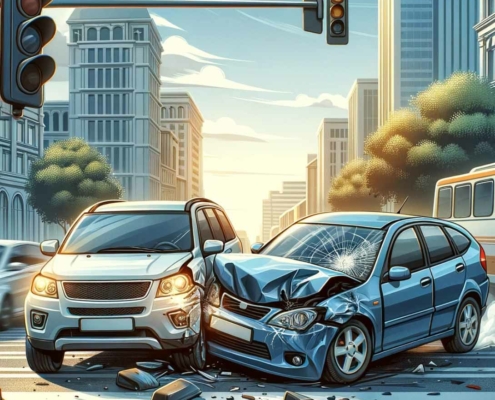
- During a transportation accident—as a cyclist or pedestrian, in a vehicle, or on a motorcycle
- While working
- Participating in sports
- Doing household chores
- Involved in an assault
There are several risk factors that contribute to the chance of a back injury.
- Being over 45 years old,
- Male,
- Physically unhealthy,
- Having bad posture,
- Being overweight,
- The kind of work you do,
- Having osteoporosis
Visiting the doctor
See your physician if you have:
- Back pain that doesn’t go away after a few days,
- Pain that prevents you from going about your everyday business,
- Back pain that gets worse with time, and
- Concerns about the pain in your back
What is the process for diagnosing back injuries?
Your general health and symptoms will be questioned by your doctor. They will examine you to determine if the nerves in your spinal cord are working properly. Make sure to tell them if you’re having any difficulty going to the bathroom.
In most cases, no testing is required. X-rays and scans are typically only required when you have:
- Issues controlling the bladder and bowel
- Legs that are weak or numb
- Risk factors for injuries include:
- Being female
- Over 70
- Using corticosteroid drugs
- Having cancer
- Experiencing an accident.
It is rare for scans and X-rays to reveal the source of your discomfort or alter the way it is managed. You can also be exposed to needless radiation from them.
Your physician might arrange for additional testing. Persistent pain often raises concern about “how long for a back injury to heal?”
Treatment for back injuries
The severity of your back ailment will determine the course of treatment. The majority of small back ailments go much better in six weeks.
Minor injuries to the back can be treated with straightforward methods.
- Keeping active. Engage in as many of your regular activities as you can
- Basic pain management techniques
Your doctor might recommend physiotherapy.
1. Being active
You must remain active. There’s a widespread myth that bed rest will help get rid of back pain.
In fact, the healing process is delayed by bed rest. You’d be wise to get back to work right away. It depends on what you do for a living. Even if it’s only part-time or doing less, this will help you get back on your feet.
2. Alleviation of pain
Simple techniques for reducing pain can be beneficial to you, including:
- Warm packs
- Easy breathing
Your doctor can recommend the use of painkillers (paracetamol). These may help keep you moving while you are recovering.
More potent drugs such as benzodiazepines and opioids are not recommended. This is due to the fact that they may result in reliance and tolerance.
You can discuss the best pain management for a back injury with your physician or pharmacist.
Treatment can further be divided into Conservative and Non-Conservative. Understanding “how long for a back injury to heal?” also depends on whether treatment is conservative or surgical.
3. Conservative
- Inflammation, edema, discomfort, and muscular spasms related to acute back injuries are all reduced by cold therapy.
- The heat therapy is applied for relaxing and moistening the muscles and for reducing pain.
- Medication: Non-steroidal anti-inflammatory drugs can help relieve mild pain. A physician might prescribe a stronger pain reliever (narcotic/relaxing drug). This is when pain is still unbearable after using over-the-counter drugs.
- Therapy & alternative medicine: An active rehabilitation strategy is preferred over bed rest for the majority of back injury situations. Exercise prevents atrophy brought on by inactivity and enhances strength & functional rehabilitation. Physical therapy can reduce pain. It can also improve strength and function.
Gentle movements of tai chi and yoga might counteract the adverse psychosocial impacts that can follow an accident & enhance function. There is conflicting evidence about the efficacy of manipulation of the spine, massage, and acupressure in pain treatment.
- Injections: Spinal nerve blockages & epidural injections are alternatives to reduce pain and neurological symptoms. Injections of steroids can be used to lessen edema and inflammation around spinal nerves. Anesthetic injections can reduce discomfort.
5. Non-Conservative
- Surgery is considered when conventional therapy is unsuccessful. Ten to twenty percent of those experiencing mild back pain do not respond to conservative treatments.
A discectomy is a frequent treatment performed to treat neurological symptoms and radiating pain caused by a herniated disc. The purpose of a discectomy is to remove the part of the intervertebral disc that is bulging into the vertebral foramen, although there are other versions of the surgery with different techniques to access the ruptured disc.
- A herniated disc can potentially be treated with a total disc replacement. With this surgery, the complete vertebral disc is removed and replaced with an artificial one, as opposed to just the prolapsed section, as in a discectomy.
- Surgical treatments have been reported to be more successful than conservative ones for spinal fractures. Vertebroplasty & kyphoplasty are minimally invasive surgical techniques. They alleviate pain and improve function in vertebral fractures.
“How long for a back injury to heal?” is best determined by a medical professional.
Back injury complications
The reason for your injury will determine any complications from a back injury. Complications are rare with most minor back injuries.
More severe back injuries may result in permanent impairment that limits your freedom and mobility. Your mood may be affected by a back ailment.
Back injuries: Can we prevent them?
Yes. A healthy lifestyle can help.
- Well-balanced diet
- Physical activity
- Shedding extra weight
- Maintaining the health of your bones
The utility of general training in manual labor to prevent back injuries or disabilities is not well supported by research.
Epidemiology
- Those aged 15 to 29 and those aged 65 and above have the highest rates of spinal column injuries.
- 50% of spinal injuries are thought to be caused by auto accidents.
- Despite the fact that most vertebral fractures go undetected, the annual cost of treating them is thought to be $1 billion in the United States.
- The age range of 30 to 50 is when symptomatic disc ruptures are most prevalent. The lumbar spine is where 95% of herniated discs in patients aged 25 to 55 are found.
- Around 26–50% of kids have either chronic or acute back pain by the time they are 15 years old.