Sick Time Use in California: Employee Choice and Employer Mandates

In California, under the Healthy Workplaces, Healthy Families Act of 2014 (California Labor Code sections 245-249), employees are entitled to accrue and use paid sick leave. However, questions often arise regarding whether employees have the option to decline using company-provided sick pay and instead take unpaid leave, as well as whether employers can mandate the use of paid sick time.

By Brad Nakase, Attorney

Email  |  Call (888) 600-8654

Have a quick question? I answered nearly 1500 FAQs.

Can an Employee in California Choose Whether to Use Company-Provided Sick Time or Take Unpaid Leave When Calling Out Sick?

Employees are generally entitled to decide whether or not to use their accrued sick leave when taking time off due to illness. For example, an employee who is saving their sick leave for a future medical procedure may prefer to take a day off without pay if they are only mildly ill. Similarly, an employee might opt to forgo paid sick leave in order to preserve their balance for childcare emergencies or other significant personal needs. However, there are circumstances where employees may not have a choice. For instance, if an employer’s policy explicitly requires employees to use accrued sick leave for any absence related to illness or medical needs, the employee may be mandated to use their sick leave. Such policies are generally lawful, provided they comply with California’s sick leave laws and do not result in retaliation or discrimination. The California Labor Code does not explicitly require employees to use their paid sick leave if they prefer to take the time off without pay, but employer policies can dictate otherwise. Employees have the right to use sick leave without interference, but the law does not explicitly grant the right to decline it in favor of unpaid time off in all situations.

Can an Employer Mandate the Use of Company-Provided Sick Pay if an Employee Prefers to Take a Sick Day Without Pay?

Employers may establish policies requiring employees to use available paid sick leave when taking time off for illness. For example, if an employee calls out sick due to a minor cold and prefers not to use their accrued sick leave, an employer may enforce a policy mandating the use of that sick leave to ensure compliance with company leave protocols. Similarly, if an employee has a large bank of paid sick leave and requests unpaid time off instead, some employers may require the use of accrued paid sick time first. Such policies are typically lawful as long as they align with California’s sick leave laws and do not result in retaliation or discrimination against employees.

Practical Implications

  • If an employee requests unpaid time off for a sick day while they have accrued sick leave, the employer’s policies may require them to use their paid sick leave instead. For instance, an employee with a sufficient bank of paid sick leave who requests unpaid leave for a minor illness may be compelled to use the available sick leave to comply with company policies.
  • Employees should familiarize themselves with their employer’s policies or consult with HR to clarify whether unpaid time off is an option when paid leave is available. For example, some companies may explicitly state in their employee handbook that unpaid time off is not permissible if paid sick leave is available.
  • Employers must ensure that their sick leave policies comply with California law, which provides for a minimum of 24 hours (or three days) of paid sick leave per year for eligible employees. As an example, if an employer’s policy requires employees to use more than three days of accrued paid sick leave within a calendar year, it must still adhere to the provisions outlined in the Healthy Workplaces, Healthy Families Act of 2014.

Ultimately, the specific circumstances and the employer’s policies will determine whether an employee can choose unpaid leave over using paid sick time and whether the employer can mandate the use of paid sick leave. Employees are encouraged to understand their rights under California law and their employer’s specific policies to navigate these situations effectively. If disputes or uncertainties arise, employees may seek guidance from the California Division of Labor Standards Enforcement (DLSE) or consult legal counsel.


Have a quick question? We answered nearly 2000 FAQs.

See all blogs: Business | Corporate | Employment Law

Most recent blogs:

California Random Drug Testing Law

California Random Drug Testing Law

California random drug testing law restricts workplace drug screening and protects employees from certain testing practices and cannabis-related employment decisions. See when random testing is permitted, which jobs are exempt, and how California law protects employee privacy rights.
Pay Stub Laws California

California Paystub Law: Wage Statement Requirements and Penalties

California paystub law requires itemized wage statements with accurate earnings, hours, rates, deductions, pay periods, and employer details. Employers face penalties for missing or incorrect pay stubs, while employees may request records and seek compensation.
Are Truck Drivers Independent Contractors or Employees

Are Truck Drivers Independent Contractors or Employees?

California's AB5 uses the ABC test to determine whether truck drivers qualify as employees or independent contractors. Trucking companies and owner-operators must evaluate exemptions, worker benefits, business structures, and potential compliance risks.
California Rest and Meal Break Laws 2026

California Rest and Meal Break Laws 2026: Complete Guide

California rest and meal break laws set requirements for breaks, waivers, employer duties, and premium pay after violations. This 2026 guide details employee rights, penalties, industry exceptions, common infractions, and recordkeeping practices.
What Is Considered Wrongful Termination in California

What Is Considered Wrongful Termination in California?

Wrongful termination in California may involve discrimination, retaliation, contract breaches, protected leave violations, or dismissals that violate public policy. Employees can review common examples, available remedies, evidence to preserve, and steps to take after an unlawful firing.
Am I Being Sexually Harassed At Work

Am I Being Sexually Harassed At Work?

Workplace sexual harassment can include unwanted touching, sexual remarks, explicit messages, stalking, repeated date requests, or demands for sexual favors. California employees can preserve evidence, report misconduct in writing, and pursue legal action when an employer fails to respond.
California Law on Deductions from Wage Paycheck

California Law on Deductions from Wage Paycheck

California wage deduction laws limit what employers can withhold for uniforms, meals, housing, debts, taxes, and garnishments. See when employee consent is required and what remedies may apply for improper paycheck deductions.
Workplace Bullying- California Laws, Rights, and Examples

Workplace Bullying: California Laws, Rights, and Examples

Workplace bullying in California can involve verbal abuse, sabotage, threats, cyberbullying, or harassment tied to protected traits. California employees may have legal options when bullying becomes discrimination, retaliation, wrongful termination, or other unlawful workplace conduct.
Do you get paid for training at a job

Do You Get Paid for Training at a Job?

Paid training rules can affect wages for job orientations, meetings, classes, and required work-related courses. See when training must be paid, when exceptions may apply, and how employees can document unpaid hours.
How Long Is Maternity Leave in California

How Long Is Maternity Leave In California?

California maternity leave may include CFRA bonding time, pregnancy disability leave, paid family leave, and job protection. This guide covers eligibility, pay options, breastfeeding rights, and steps when an employer denies leave.
Can Your Employer Spy on You at Home

Can Your Employer Spy on You at Home?

Employee monitoring laws may allow workplace surveillance on company devices, but privacy rights still limit spying at home. Review rules for notice, consent, personal devices, webcams, GPS tracking, email, calls, and state laws.
Are employers required to pay for unauthorized overtime

Are Employers Required To Pay For Unauthorized Overtime?

Employers must pay unauthorized overtime when workers perform extra hours, including off-the-clock time known to the company. California law allows discipline for policy violations, but employers cannot withhold earned wages.
How to Calculate Daily and Weekly Overtime in California

How to Calculate Daily and Weekly Overtime in California

Calculate daily and weekly overtime in California, including pay rates, bonuses, commissions, and salaried employee rules. California overtime laws affect workers, employers, wage calculations, payroll records, and costly pay mistakes.
How to Sell Yourself

How To Sell Yourself In A Job Interview

Show hiring managers your value in a job interview without sounding boastful or forced. Share results, numbers, and a strong career story that supports your fit for the role.
Is Semi-monthly and Bi-weekly The Same Thing

Is Semi-monthly and Bi-weekly The Same Thing?

Semi-monthly and bi-weekly payroll differ in timing, pay periods, overtime handling, and total annual paychecks for employees and employers. Compare both schedules to choose the right fit for budgeting, payroll processing, and workforce needs.
How To Sue Your Employer

How To Sue Your Employer In California

See when California workers may sue an employer for discrimination, retaliation, unpaid wages, wrongful termination, or leave-related violations. Review the records, deadlines, and legal steps that can affect a workplace claim in California.
Can an employee be terminated while on medical leave

Can An Employee Be Terminated While On Medical Leave?

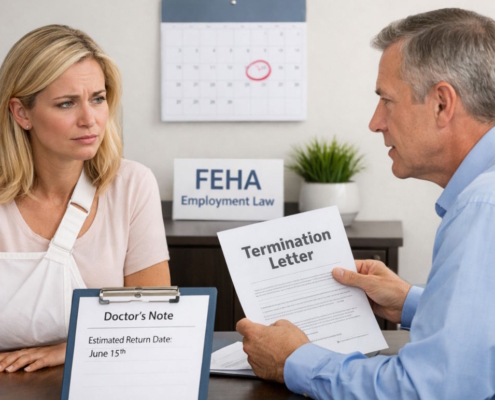
California employees on medical leave can still be fired in some cases, based on the reason for termination and the medical record. This article covers FEHA, return-to-work dates, and doctor’s notes that may affect a disability or leave-related claim.
Wrongful Termination Lawsuit in California

Wrongful Termination Lawsuit in California

California wrongful termination lawsuits may involve discrimination, retaliation, contract breaches, WARN Act violations, AI-based firing, or public policy violations. This article covers claim grounds, supporting evidence, court steps, and possible compensation after an unlawful firing or forced resignation.
Tips on Misclassification of Exempt Employees

Tips on Misclassification of Exempt Employees

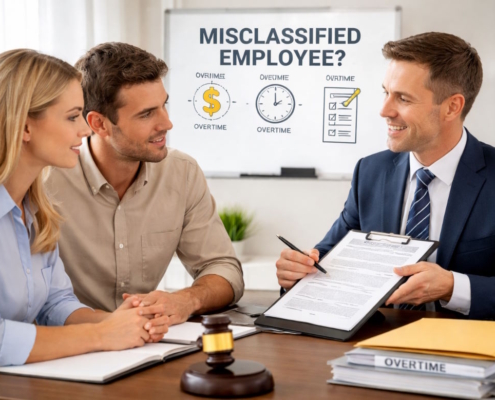
California workers may lose overtime, meal breaks, and rest breaks when employers wrongly label positions as exempt. This article explains exemption rules, misclassification warning signs, possible damages, and the role of an employment attorney.
Retaliation for Reporting Harassment at Work

Retaliation for Reporting Harassment at Work

Retaliation after reporting workplace harassment can include firing, demotion, pay cuts, schedule changes, or other harmful job actions. This article outlines protected activity, signs of retaliation, evidence to gather, complaint deadlines, and the legal steps involved.
How is an independent contractor different from an employee

How Is An Independent Contractor Different From An Employee?

See how California law separates independent contractors from employees, including control, pay, benefits, and legal protections. Get the facts on worker classification, misclassification costs, and the legal tests courts and agencies apply.
What is the Equal Pay Act

What is the Equal Pay Act and Worker Rights?

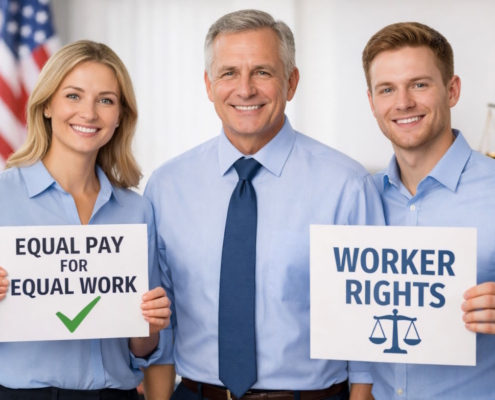
The Equal Pay Act bars wage discrimination for substantially similar work and protects workers facing unequal pay, retaliation, and hiring bias. This article outlines federal and California pay rules, employer defenses, filing deadlines, damages, and legal rights for employees and applicants.
How to Call in Sick - Simple Tips for Notifying Your Boss

How to Call in Sick? Simple Tips for Notifying Your Boss

Get simple tips for calling in sick, telling your boss, and handling sick day communication at work with confidence and professionalism. See when to notify your manager, what to say, and how to stay professional during one-day or multi-day absences.
FMLA Retaliation and Wrongful Termination

FMLA Retaliation and Wrongful Termination

Facing termination after medical leave may signal FMLA retaliation and violations of your job protection rights. Review common warning signs, legal options, and how an experienced California FMLA attorney can support your claim.

Contact our attorney.

Please tell us your story:

4 + 3 = ?

© Copyright | Nakase Law Firm (2019)