Scholastic Art & Writing Awards

The Scholastic Art & Writing Awards is a prestigious program in the United States that recognizes and celebrates creative excellence among middle and high school students. It is administered by the Alliance for Young Artists & Writers and has been in existence since 1923, making it one of the longest-running and most esteemed programs of its kind.


By Brad Nakase, Attorney

Email  |  Call (888) 600-8654

Have a quick question? I answered nearly 1500 FAQs.

Purpose

  • The Awards aim to identify and honor young artists and writers with exceptional creative talents.
  • They provide a platform for students to gain recognition for their work at local, regional, and national levels.

Eligibility

  • Open to students in grades 7–12 in the United States, U.S. territories, and American schools abroad.
  • Participants must be 13 years of age or older to submit.

Submission Categories

  • The program offers opportunities in a variety of categories across art (e.g., painting, sculpture, photography) and writing (e.g., poetry, short story, dramatic script).
  • It also includes portfolio categories for high school seniors.

Awards and Recognition

  • Submissions are first evaluated at the regional level through local affiliates.
  • Top regional works receive Gold Keys, Silver Keys, or Honorable Mentions and can advance to the national level.
  • National awards include Gold Medals, Silver Medals, and special awards like the American Visions and American Voices Medals.
  • Scholarships and cash prizes are often available for recipients.

Exhibitions and Publications

  • National award-winning works are often showcased in exhibitions or featured in publications.
  • Selected works may be displayed at venues like the Art.Write.Now. National Exhibition in New York City.

Educational Opportunities

  • Students gain access to workshops, networking opportunities, and feedback from experts in the creative industry.
  • Teachers and schools of recognized students are also celebrated for fostering creativity.

Why Participate?

  • Provides a platform for creative students to gain recognition and validation for their talents.
  • Offers scholarships and financial support for higher education.
  • Helps build a portfolio for college applications or professional development.
  • Connects participants to a broader community of young artists and writers.

Art Categories

  1. Architecture: Original designs for buildings or other structures.
  2. Ceramics & Glass: Sculptures or works primarily made of ceramic or glass materials.
  3. Comic Art: Sequential art that tells a story or expresses an idea.
  4. Design: Functional designs like fashion, product, or graphic design projects.
  5. Digital Art: Artwork created or manipulated using digital tools or software.
  6. Drawing & Illustration: Traditional or mixed-media drawings and illustrations.
  7. Editorial Cartoon: Single-frame or multi-frame cartoons commenting on societal issues.
  8. Fashion: Original clothing or accessory designs.
  9. Film & Animation: Short films, animations, or video projects.
  10. Jewelry: Handcrafted pieces of wearable art.
  11. Mixed Media: Works combining multiple art mediums (e.g., collage, assemblage).
  12. Painting: Works using traditional painting mediums like acrylic, oil, or watercolor.
  13. Photography: Original photographic images captured and composed by the artist.
  14. Printmaking: Art made through traditional printmaking methods (e.g., etching, lithography).
  15. Sculpture: Three-dimensional works made from materials like clay, metal, or wood.

Writing Categories

  1. Critical Essay: Analytical essays that explore literary, cultural, or political topics.
  2. Dramatic Script: Screenplays, stage plays, or other written scripts for performance.
  3. Flash Fiction: Extremely brief stories, typically under 1,000 words.
  4. Humor: Writing that explores humorous themes or uses comedic techniques.
  5. Journalism: Nonfiction articles exploring factual topics, often with a news angle.
  6. Novel Writing: Excerpts or full submissions of long-form fictional works.
  7. Personal Essay & Memoir: Nonfiction works exploring personal experiences.
  8. Poetry: Collections of original poetry.
  9. Science Fiction & Fantasy: Fiction set in imaginative worlds, often speculative in nature.
  10. Short Story: Fictional narratives typically under 10,000 words.
  11. Writing Portfolio: A collection of up to eight works demonstrating a range of styles and ideas (for seniors only).

Additional Requirements and Guidelines

  • Each submission must be original and created by the student.
  • Collaborative submissions are allowed in select categories, such as Film & Animation.
  • Students may submit multiple works in various categories but must adhere to specific guidelines for each type.
  • The works must be submitted digitally through the Scholastic platform for initial review.

Have a quick question? We answered nearly 2000 FAQs.

See all blogs: Business | Corporate | Employment Law

Most recent blogs:

Inc vs. LLC – What are the differences

Inc. vs. LLC: What Are The Differences?

Inc. and LLC differ in taxes, ownership, liability, management, and formation, shaping how a business runs and grows. This guide covers pros, drawbacks, and common features to help choose the structure that suits your goals.
eBay vs Amazon

eBay vs Amazon: Seller Differences and Fees

Compare eBay and Amazon seller fees, fulfillment options, audiences, and listing models to find the right fit for your products. See pricing, cross-listing, arbitrage, and selling tips that can help boost profits across both marketplaces.
How To Make Your Business Stand Out

How To Make Your Business Stand Out

Make your business stand out by defining your unique value, solving customer problems, and giving people a reason to choose you. This article covers practical ways to sharpen your niche, improve service, market with purpose, and build stronger customer loyalty.
Learn About SBA Loan Process

Learn About The SBA Loan Process

This article explains the SBA loan process, lender selection, timelines, loan types, costs, and approval requirements for small businesses. It also covers eligibility, common application issues, pros and cons, and other funding options for business owners.
How do you get approved for an SBA Express loan

How do you get approved for an SBA Express loan?

SBA Express loans can offer up to $500,000 with reduced paperwork, lender-led decisions, and funding that may take about two months. Get key approval requirements, credit factors, documents, fees, and timing details before applying for an SBA Express loan.
What is the working capital cycle

What is a Working Capital Cycle?

Working capital cycle shows how cash moves through inventory, receivables, and payables, revealing how efficiently a business runs. A shorter cycle can improve liquidity, support daily costs, and free cash for growth, planning, and smarter financial decisions.
Marketing for Wholesale - B2B Growth Strategies

Marketing for Wholesale: B2B Growth Strategies

Wholesale B2B marketing strategies help suppliers attract buyers, strengthen partnerships, and increase sales in competitive markets. Covers websites, custom pricing, trade shows, marketplaces, analytics, testimonials, email, social media, and SEO for steady growth.
False Claims Act Healthcare Examples

False Claims Act Healthcare Examples

See real healthcare fraud examples under the False Claims Act, including billing scams, kickbacks, forged records, and improper reimbursements. Review penalties, whistleblower protections, and how Medicare and Medicaid fraud cases lead to fines, settlements, and criminal charges.
How to Open A Coffee Shop

How to Open A Coffee Shop

Start a coffee shop with steps on market research, business planning, permits, funding, equipment, hiring, and menu design. See tips on site selection, pricing, POS setup, suppliers, marketing, grand opening, and budgeting, plus franchise vs. independent comparisons.
What is a Loyalty Program

What is a Loyalty Program: Benefits and its Importance?

A loyalty program rewards repeat customers, boosts retention, increases purchase frequency, and raises lifetime value through points, tiers, subscriptions, or referrals. This guide covers benefits, income impact, implementation steps, costs, metrics, and common pitfalls businesses should consider before launching.
What are the components of a marketing plan

What are the Components of a Marketing Plan?

What are the components of a marketing plan? This guide breaks down audience targeting, goals, competitor analysis, content production, and performance measurement. Build a focused marketing plan that supports business growth, improves lead quality, and drives measurable results across channels.
Business Equipment Leasing Pros and Cons

Business Equipment Leasing Pros and Cons

Compare the pros and cons of business equipment leasing, including capital preservation, tax treatment, flexibility, and risk management in changing markets. Review lease types, costs, ownership limits, and access challenges to decide if leasing fits your company’s growth strategy.
What Does A Trustee Do

What Does A Trustee Do?

Trustees manage and protect trust assets, follow fiduciary duties, and oversee distributions during life, incapacity, and after death. This guide outlines trustee responsibilities, successor roles, tax obligations, compensation rules, and key steps in trust administration.

Sole Proprietorship vs. LLC

Compare sole proprietorship vs LLC for 2026, including liability, taxes, compliance costs, and business continuity for solo owners. See key similarities and differences, plus when each structure makes sense based on risk, control, and future plans.

How to form a corporation in California

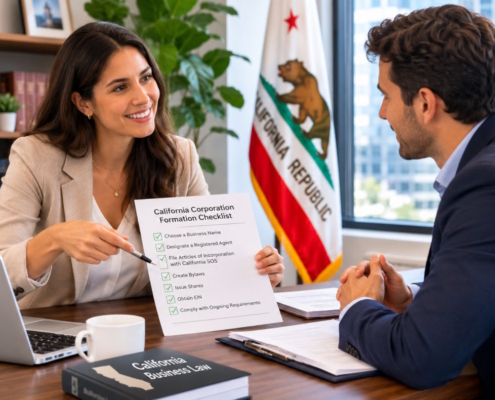
Form a California corporation with step-by-step filing guidance, required documents, and key compliance tasks for long-term liability protection. Compare C vs. S corporation taxes, bylaws, board roles, and how to stay in good standing.

Community Involvement: Benefits and Ideas

Boost your business and your neighborhood with community involvement ideas that build trust, teamwork, and local connections. Get practical ways to volunteer, sponsor events, and give back without needing a huge budget.
Best Applicant Tracking Systems for Businesses of All Sizes

Best Applicant Tracking Systems for Businesses of All Sizes

Find the best applicant tracking systems for startups to enterprises, featuring automation, customization, and advanced candidate management tools. Compare top ATS platforms like Workable, Greenhouse, and Breezy HR to streamline hiring and enhance team efficiency.
How Do I Draft a Contract Termination Letter

How Do I Draft a Contract Termination Letter?

A contract termination letter formally ends an agreement while maintaining professionalism and clarity. This guide outlines key elements, writing steps, and sample templates to ensure a smooth process.

Contact our attorney.

Please tell us your story:

0 + 2 = ?