How to File a DBA in California

All person and business entity must file a fictitious business name (FBN) statement with the Registrar-Recorder/County Clerk’s office in the city where the business will be located.
Brad Nakase, Attorney

Email  |  Tel 800-484-4610

In California, a DBA name, or “doing business as,” is a fictitious business name that allows a company to operate under a different name than that under which it is registered.

It should be noted that registering a DBA name in California does not create liability protection. This means that a DBA does not protect a business owner’s personal assets in any way. Only by forming a business structure such as a limited liability company (LLC) will give a business owner liability protection.

A DBA is a useful tool for branding or marketing. It can increase brand recognition or make a name more descriptive of the particular business. For larger corporations or businesses, it can allow for individual branding without having to start separate businesses. Take Eva for example. She started out with a tailoring business but wanted to branch in wedding dresses. Her original name was no longer descriptive of her business, so she has reason to want a DBA related to wedding dresses.

In the event a company is sued, a DBA does not offer any protection of personal assets. Because of this, it is recommended that a DBA only be used by a formal business type such as a corporation or LLC, or by a business wanting to add new brands. In general, it is recommended to form an LLC rather than a sole proprietorship or partnership because an LLC offers liability protection. Doing so separates a business from an owner’s personal assets.

Luckily, filing a DBA in California is a relatively easy process.

1. DBA Name Search

In California, a business’ fictitious DBA name should be original and also meet the state’s naming requirements. Therefore, it is necessary for a business owner to search county and state records for the proposed name to ensure that it is not already taken.

Some of the naming rules in California include:

  • The business name should not include a business entity suffix (LLC, Inc., Corp., etc.) if the business is not actually an LLC, corporation, etc.
  • The business name should not include certain restricted words, such as Bank, Attorney, or University. If a business hires a licensed individual such as a doctor or a lawyer, then restricted words can be approved after filing specific paperwork.

The full list of California naming rules is available in California’s Code of Regulations.

It is also recommended to check a potential domain name (URL). Even if a business owner has no immediate plans to start a website, it is still a good idea to reserve a domain name for a DBA. This would prevent other individuals from getting the URL first. It is possible to search for available URLs by using a service such as GoDaddy.

2. Using a DBA in California

In California, DBA names are filed with the county in which the business primarily operates. This means that if a company mostly conducts business in Los Angeles, then the business owner must file the DBA with LA County. If, however, a company’s principal place of business is located outside of California, then it must file with the Sacramento County Clerk.

It should be noted that nonprofit organizations do not need to file a Fictitious Business Name Statement.

The state of California is responsible for creating and monitoring DBA regulations. This means that counties in California have similar steps for acquiring a DBA.

In Los Angeles County, a business owner can file a DBA online on the LA County Clerk’s DBA name portal. Or, if preferred, a business owner can call (800) 201-8999 to receive forms by mail. Forms may also be picked up in person at the County Clerk’s office.

When a business owner applies for a DBA in person, statements do not need to be notarized. If a business owner applies by mail or third party, however, they must provide a Notarized Affidavit of Identity. This form can be picked up in person at the County Clerk’s office or is available to be mailed by calling (800) 201-8999.

But not so fast! Once a business owner registers his or her chosen DBA, it must be renewed every five years with the relevant California county. Renewal forms are available on the county’s website. It costs $26 to renew a DBA name. It is possible that, depending on how the form is delivered, a notarization form may be required.

What if a business owner wants to change his or her DBA? Not to worry! To make changes to an already-registered DBA, a business owner can visit the Fictitious Business Name Amendment page on their county website. This form may need authorization depending on how it is filed.

It is also possible to withdraw a DBA. To get a Statement of Abandonment, a business owner should call their county clerk. The LA County number is (800) 201-8999. If a business owner’s county does not have this form available, then it can be created on one’s own using the rules listed on the California Legislative website.

3. Registering a California DBA

The state of California requires business owners to publish a “fictitious business name statement” in a county newspaper within 30 days of registering the DBA. This statement must be published once a week for four straight weeks. For detailed publication requirements, one can visit the California Legislative website.

The publication steps and requirements can be summarized as follows:

  • The chosen newspaper has to be in general circulation in the county where the DBA was registered. The county website will list acceptable publications.
  • A business owner should contact the newspaper of choice and request to publish a “fictitious business name statement” in the paper once a week for a month’s duration.
  • If a business owner is refiling a DBA because the original expired, then the statement must be published again.
  • A business owner must file an affidavit within 30 days of finishing the publication step in order to prove publication.

The county clerk’s office can answer any questions regarding publication requirements. County contact information is provided on the California Department of Public Health’s website.

After California DBA Filing

 After filing a DBA in California, there are a few more steps to getting a business up and running.

Create a Business Website

Nowadays, every business needs a website, however large or small the company. Thankfully, there are easy-to-use websites like GoDaddy and Wix that can help build an amazing website.

Organize Business Finances

 An essential step of getting a business tarted is separating company finances from personal finances. To do this, a business owner should open a business bank account. Getting a business credit card is also a useful way of separating personal and business finances.

Protect the Business

Business insurance protects a company’s assets in the event of a lawsuit. It is similar to how an LLC can protect the personal assets of its owner. The base coverage for a business is general liability insurance.

Common Questions

How many DBAs is it possible to have?

A business owner can have as many DBAs as he or she wishes to create. That said, they then have the burden of keeping track of them. Each DBA has its own expenses and paperwork, so they would really all need to be necessary for the business. Let’s say a big apparel manufacturer decides to branch into different areas, like perfume or handbags or shoes. Filing DBAs for each of these brands would be genuinely helpful for the business. However, a small business might not want to diversify its brand so soon because of the administrative hassle of managing so many DBAs.

Does a DBA have an EIN or Tax ID?

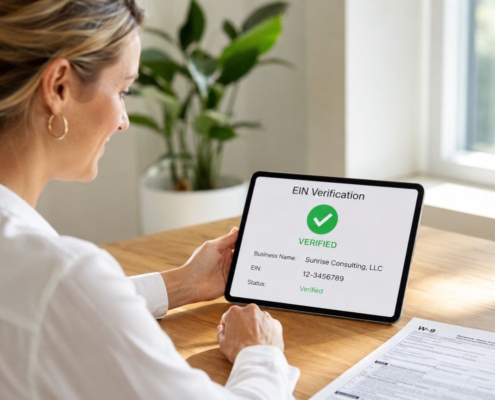
A DBA does not need to have an EIN separate from the original business. This is because DBAs are not a business entity, like limited liability companies or corporations. The business entity that the DBA falls under would have an EIN. So, for example, let’s consider a company called Millie’s Designs, which has a DBA called Millie’s Theatre Costumes. Millie’s Theatre Costumes would not have an EIN because it is only an assumed name and not a business entity. Millie’s Designs, however, is the legal name of the business entity. Therefore, Millie’s Designs has an EIN.

Is a DBA a business entity?

 A DBA is not a business entity. It is merely a separate fictitious name. This means it is not a sole proprietorship, nor can it become an LLC or a corporation. Importantly, it does not confer liability protection to an owner.

Can a DBA have Inc. or LLC in the name?

A DBA cannot have Inc. or LLC in its name unless the business entity is a corporation or limited liability company. Let’s consider a company called Andy’s Fine Footwear. Perhaps Andy wishes to create a DBA for his business called Andy’s Cowboy Boots Inc. However, Andy’s Fine Footwear is a sole proprietorship. This means he cannot put “Inc.” in his DBA unless he first changes his sole proprietorship to a corporation through the process of incorporation.

What is the difference between getting a DBA versus a legal name change?

Depending on the situation, it may be a better choice to file for a DBA than change a business’ legal name. Filing for a DBA is a simpler process than dealing with a legal name change. Getting a DBA is a good option for a business that wishes to rebrand or branch into another sector. For example, a baked goods company might want to branch into ice cream, in which case it will file for a DBA.

Is a DBA protected from being used in other states?

If a business owner wishes to protect his or her DBA from being used in another state, the best option would be to trademark the DBA on a national level. If another company tries to use the name, then the business owner could sue for trademark infringement.

Learn more about: Business | Corporate | Employment Law

Please tell us your story:

3 + 2 = ?

See all articles: Business | Corporate | Employment

28 Highest Paying Self-Employed Jobs

28 Highest Paying Self-Employed Jobs

See 28 high-paying self-employed jobs spanning writing, bookkeeping, design, consulting, real estate, childcare, fitness, delivery, and more. Find each role’s qualifications, skills, tools, and work duties to help compare self-employment options that fit different strengths.
How to Verify an EIN Number

How to Verify an EIN Number

Verify an EIN number using IRS, SEC, state databases, credit bureaus, and search tools to confirm legitimate business information. EIN verification supports KYB checks, tax reporting, fraud prevention, and safer business relationships across the United States.
How to Form a Corporation in California

How to Form a Corporation in California

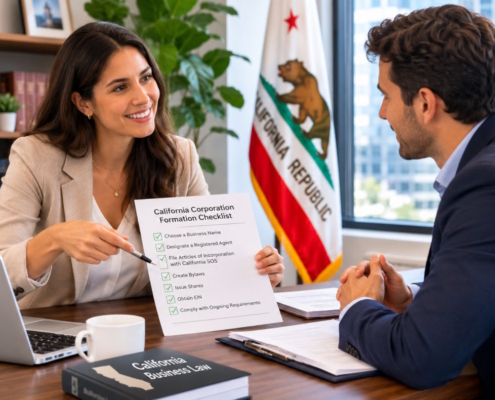
Form a California corporation with steps covering business names, registered agents, incorporation documents, bylaws, stock, licenses, taxes, and EINs. Review filing requirements, annual obligations, professional corporations, foreign businesses, online filing options, and the benefits of incorporating in California.
What Makes a Verbal Contract Valid Key Requirements

What Makes a Verbal Contract Valid? Key Requirements

A valid verbal contract requires an offer, acceptance, and consideration, subject to California contract law and the Statute of Frauds. Evidence, witness testimony, conduct, and written communications may help establish whether a verbal agreement is legally enforceable.
Prepaid Business Credit Cards Pros and Cons

Prepaid Business Credit Cards: Pros and Cons

Prepaid business cards can help control company spending, restrict employee expenses, and provide access without a credit check. Compare their fees, funding limits, benefits, drawbacks, protections, and differences from credit, debit, and charge cards.
Steps for Planning a Business Grand Opening

8 Steps for Planning a Business Grand Opening

Plan a successful business grand opening with practical steps for budgeting, promotion, insurance, event flow, food, and entertainment. Build local excitement, attract potential customers, coordinate vendors, and create a memorable launch without exhausting your marketing budget.
California EIN Number – Who What When Where Why & How

California EIN Number: Who What When Where Why & How?

A California EIN identifies your business for federal taxes and supports banking, hiring, payroll, and other essential business activities. Find out who needs an EIN, when to apply, application methods, processing times, costs, and state tax ID differences.
How do I get a DBA in California

How to get a DBA in California? California DBA Explained

Get a DBA in California by checking name availability, filing an FBN statement, and completing your county's publication requirement. Review filing costs, renewal rules, cancellation steps, and key differences between a DBA and forming an LLC or corporation.
How To Start A Food Truck Business

How To Start A Food Truck Business: Tips and Ideas

Start a food truck business in California with practical guidance on planning, financing, permits, equipment, locations, and daily operations. Review menu pricing, branding, insurance, delivery services, marketing strategies, and compliance requirements for building a profitable mobile food venture.
How to Transfer Business Ownership

How to Transfer Business Ownership?

Transfer business ownership through sales, gifts, leases, or share changes while addressing legal, tax, valuation, and debt considerations. Follow practical steps for sole proprietorships, partnerships, LLCs, and corporations to support a smooth ownership transition.
SBA CAPLines - Business Credit Lines

SBA CAPLines: Business Credit Lines

SBA CAPLines offer short-term credit for small businesses with seasonal, contract, construction, or working capital needs. These SBA-backed lines can align repayment with cash flow, inventory, receivables, and project-based revenue cycles.
Business Partnership Advantages and Disadvantages

Advantages and Disadvantages of a Business Partnership

See the advantages and disadvantages of a business partnership, including taxes, liability, profit sharing, privacy, and growth limits. Compare partnership types, partner duties, common risks, and agreement terms before choosing this business structure.
Characteristics of an Entrepreneur Mindset

What are the Qualities of an Entrepreneur Mindset?

An entrepreneurial mindset combines creativity, optimism, persistence, resourcefulness, and persuasive communication. These qualities help entrepreneurs spot opportunities, solve problems, build trust, and make stronger business decisions.
What is invoice reconciliation

What is Invoice Reconciliation? Definition & Process

Invoice reconciliation matches invoices with purchase orders, goods receipts, and payments to improve accounts payable accuracy and control. It covers the process, common failures, and automation steps that reduce exceptions, delays, errors, and manual work.
What Happens When Business Partners Disagree

What Happens When Business Partners Disagree?

Business partner disagreements can affect operations, finances, and ownership rights. Options may include negotiation, mediation, buyouts, litigation, dissolution, bankruptcy, or court action.
What Makes An Effective Advertisement

What Makes An Effective Advertisement?

Create stronger advertising campaigns with tips for brand names, referrals, media choices, signage, flyers, and print ads. Credibility, consistency, professional design, and honest messaging can help businesses attract buyers and increase sales.
Bank Statement Business Loans

Business Loans Based on Bank Statements

Funding based on bank statements can help self-employed borrowers and small businesses qualify through cash flow instead of tax returns. This option shows how lenders review deposits, expenses, loan types, benefits, risks, and approval requirements.
Starting a Bar Business- How to Open a Bar

Starting a Bar Business: How to Open a Bar

Open a California bar with steps for planning, licensing, permits, staffing, supplies, location, and POS setup. Review business licenses, occupancy certificates, food handler cards, seller permits, liquor licenses, costs, and application timelines.
Biggest Business Startup Costs

16 Biggest Business Startup Costs with Examples

Startup costs include equipment, rent, payroll, insurance, taxes, marketing, and software for new business owners. Review examples and budgeting steps that help founders estimate expenses before launching a company.
What does filing a UCC mean

What Does Filing a UCC Mean?

A UCC filing can affect business assets, loan collateral, liens, and lender rights in secured financing. This article explains UCC-1 forms, lien perfection, renewals, terminations, and how filings impact business credit.
How to start a business in California

How to Start a Business in California

Start a California business with steps for structure, filings, licenses, taxes, insurance, banking, trademarks, and online setup. This article covers state rules, required documents, tax duties, and ways to reduce personal financial risk.
Responsibility of a Trustee

Responsibility of a Trustee in Trust Management

Trustees manage trust assets, protect beneficiaries, keep records, pay bills, file taxes, and follow the trust document. Review trustee duties during incapacity, death, asset distribution, compensation, and resignation.
What is a demand letter for payment

What is a Demand Letter for Payment?

A demand letter for payment asks someone to resolve an unpaid debt before legal action begins. It states the claim, amount owed, deadline, and possible next steps if payment is not made.
Why Do Companies Incorporate in Delaware

Why Do Companies Incorporate in Delaware?

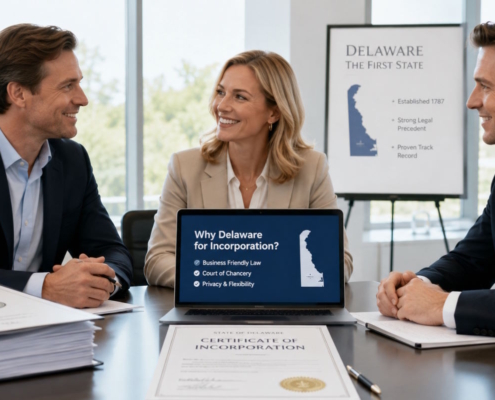
Why companies incorporate in Delaware often comes down to tax benefits, investor confidence, corporate courts, and privacy rules. This article covers the main costs, drawbacks, filing steps, and business factors tied to Delaware incorporation.
Businesses You Can Start with Less Than $1,000

Businesses You Can Start with Less Than $1,000

Start a business under $1,000 with low-cost ideas, startup expenses, and simple ways to test demand. Review 67 small business ideas covering services, online work, local ventures, creative projects, and home-based options.

See all articles: Business | Corporate | Employment
© Copyright | Nakase Law Firm (2019)