Introduction
A grand opening is usually a company’s way of introducing itself to the public. The grand inauguration of your company is an exciting occasion. Planning for the big opening event is absolutely essential if you want to make a good first impression on potential clients.
It’s time to throw a grand opening celebration when a proprietor of a small business has invested months or years developing their enterprise and is now prepared to present it to the public. This event is essential to a company’s launch strategy, so it shouldn’t be an afterthought. This is an entrepreneur’s opportunity to discover new clients, gain visibility, and ensure that the business will begin with an excellent opening.
The best practices for organizing a new business’s grand opening will be covered in this article.
Establish Objectives for the Business Grand Opening Event
Goals should be included in every section of a company’s grand opening strategy, so a business grand opening function shouldn’t be any different. Setting specific objectives, such as obtaining the contact details of a predetermined number of clients, is vital before organizing the event. Less specific objectives, including increasing brand awareness, should also be included.
Generally speaking, an entrepreneur’s objectives should be to attract clients, cultivate connections, and produce a special and unforgettable event.
Plan the Business Grand Opening in Advance
The ideal time to schedule the company’s big opening is at least 2 months in advance. It is essential for a business owner to start the preparations early because grand opening events and organizing require a great deal of planning. In this manner, there is space for all the numerous details to be put together as they ought to be.
It is critical to reserve the location as soon as the date is known if a company is hosting the business grand opening ceremony at a different venue. This is due to the fact that popular locations might fill up fast. It’s necessary to reserve entertainment and refreshments as soon as possible, even if a company chooses to host the event at its own premises. This is especially relevant if the event takes place during the well-known summer months.
What is the appropriate budget for a grand opening?
Twenty percent of the initial year’s marketing expenditure is recommended for the business grand opening. 5-8 percent of anticipated sales during the initial two months is a common guideline. For advertisements to be seen regularly in the two weeks preceding the event, there should be sufficient funding allocated for them. Nevertheless, a business owner shouldn’t spend so much that they run out of money for the remainder of the year.
A business owner must be able to stage a special event with twenty percent of their marketing budget without depleting their marketing budget for the remainder of the year. Additionally, food and entertainment costs may mount up rapidly, so it’s critical to establish a sensible and economical budget.
Get business insurance ahead of the grand opening
Small business insurance may protect a company against harm or damage to its property. For instance, general liability insurance could pay for visitor injuries or venue damage in the event that a visitor unintentionally falls or starts a fire. This kind of coverage shields you in the event that you are held accountable for harm or property damage. The Insurance Information Institute states that a small business should, at the very least, have the following kinds of insurance:
- Liability insurance
- Company vehicle insurance
- Property insurance
- Workers compensation insurance
Even when the company only employs a small number of people, a business owner would like to make sure they have adequate coverage before holding the business grand opening event. A business owner ought to guarantee that they are insured in the event of an accident because having more people on the property increases the likelihood of an accident.
Must Read: How to Incorporate a Small Business in California?
Promote Ahead of the Grand Opening
A business owner must begin promoting the event locally and on various platforms around two weeks prior to the big opening. Images and messaging should reflect the brand of the business. The company owner could consider advertising the grand opening on several platforms, including these, to reach as many people as possible.
- Radio: While some radio stations will let a company promote for a shorter time, the majority will prefer a business to enter into a long-term deal. To obtain good availability, it is best to get in touch with radio networks as soon as you can.
- Direct Mail: Sending a marketing message to every home in the company’s zip code is a terrific method to generate excitement for the big opening, even though postal delivery can be costly.
- Flyers: Making printed flyers that are easily displayed in the neighborhood surrounding the business is a smart idea before the event. They can be displayed on message boards in the community and other locations. For example, adverts for businesses and events can be posted on boards found in many grocery stores and libraries.
- Social Media: It would be advisable to concentrate on internet advertising if a company doesn’t have a physical location. Facebook provides tailored advertisements that are displayed to people in specific zip codes or who fit specific demographics. This guarantees that the advertisement for the official opening is seen by the appropriate individuals.
Make an event especially for the grand opening after creating a Facebook page. On the event’s main page, folks looking for things to do in the vicinity will see it and be able to RSVP, which will let you know who is interested in coming. Making a brand hashtag & encouraging your clients to use it both during and after the event is also a great idea, as it will show their friends and family how fantastic your company is!
- Press Statement: A business owner must provide information about the event in a press release before the event date, including:
-
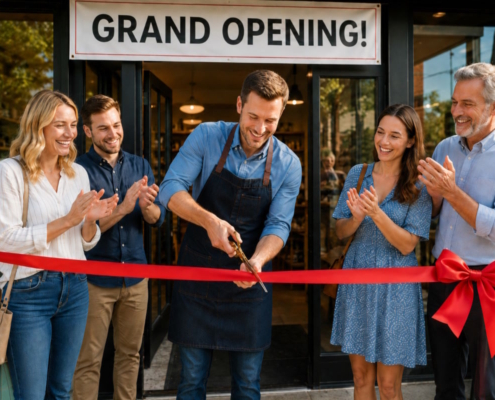
- Ceremony to cut the ribbon, if applicable
- The timing and place of the event
- Free gifts, entertainment, and food
- More details about the business
Think of a soft opening
In order to get ready for the grand opening, a soft opening allows you and your staff to test things out. This option allows your staff to put what you’ve shown them in instruction into practice.
You may observe the team in action and pinpoint areas that need improvement. You can also get input from the attendees during a soft opening. Friends, relatives, other company owners, and other contacts may be invited for the soft opening.
Design the event flow
Additionally, effective pacing safeguards your operations. Speeches that begin too late cause attendees to stray. People can miss the presentation if the food starts too early. Your team is pulled in five different directions if all of the activities take place at once. Event management is important in this situation. Gathering leads, thanking collaborators, introducing the proprietor, or encouraging visitors to take a tour of the venue. The timeline should complement your business objectives.
The same sequencing reasoning used for private parties and multi-part celebrations may help businesses design more complicated launch-day arrangements. Split-schedule planning for events is helpful when you have to arrange speeches, tours, demonstrations, & food without a lot of downtime.
People know their responsibilities. It contributes to the tranquility of professionally run events. Vendor coordination is owned by someone. The program is activated by someone. VIPs are greeted by someone. Someone keeps an eye on the timing of meal service. Before little problems become major problems, someone takes care of them. Without those tasks, business owners frequently spend the event responding to simple logistical inquiries rather than interacting with customers, partners, and visitors.
Provide entertainment and food at the grand opening
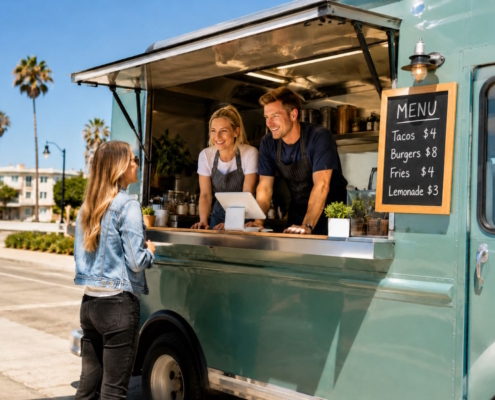
Give the guests a reason to attend if you want your grand opening event to be successful. Giving away free snacks is a terrific idea since a lot of people will go above and beyond to receive them. Offering menu items would be a smart idea for a business owner starting a cafe or restaurant so that guests could sample the food. Additionally, a business owner can grill hot dogs and burgers to save money or order meals from a nearby restaurant.
Having some sort of entertainment at the event will also be significant. The audience’s composition will influence the kind of entertainment. At times, a company might require a more diverse type of entertainment for children.
Giving out free or heavily discounted goods or services is a terrific approach for a small business to draw in new clients.