Introduction
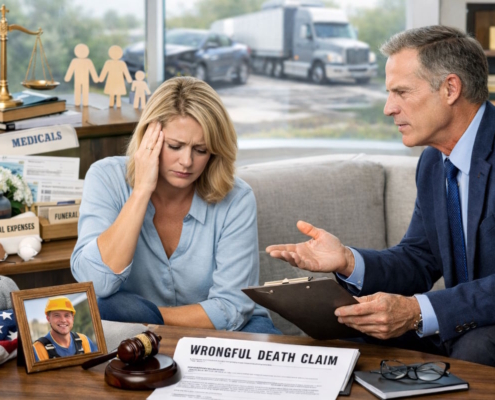
Losing someone you love because of another person’s mistake hits differently. There’s shock first. Then anger. Then that quiet, awful feeling that something went terribly wrong and can’t be undone.
The criminal court has its limits. That process is handled by the state, not you, and while it can lead to a conviction, it won’t pay the mortgage or cover the mountain of bills left on your kitchen table. Between funeral costs, medical expenses from the accident, and the sudden loss of a paycheck, the financial hit can be just as devastating as the emotional one.
In San Jose, the law gives you a way to push back through a wrongful death lawsuit.
This isn’t about putting a “price” on a human life—it’s about holding the responsible party financially accountable for the hole they’ve left in your world. A successful claim can help cover:
- Immediate Costs: Like funeral arrangements and hospital bills.
- Long-term Support: Replacing the future income and benefits your loved one would have provided.
- The “Invisible” Losses: Compensation for the loss of companionship, guidance, & emotional support.
Our San Jose legal team has walked this path with many families in the area. We know that while money can’t bring someone back, it can provide the stability you need to actually focus on healing instead of worrying about how to keep the lights on.
Wrongful Death Claim
Think of a wrongful death claim as the legal system’s way of forcing someone to face the consequences of their mistakes. If an immediate relative dies because someone else was careless—even if they didn’t mean for it to happen—the law gives you a path to demand payment for the damage they’ve done to your life.
It is very different from what you see in a criminal courtroom. Here’s the “real world” breakdown:
- The Criminal Case: This is the State vs. the Defendant. The goal is punishment—jail, prison, or probation. You’re a witness here, not the person in charge.
- The Civil Claim (Wrongful Death): This is You vs. the Defendant. The goal isn’t to put them in a cell; it’s to force them (or their insurance) to pay for the financial and emotional vacuum they created.
Also Read: What Are the Rules for Bereavement Leave in California?
What actually counts as a “Wrongful Death”?
It’s a broad category. A San Jose wrongful death attorney steps in when families lose someone to things like:
- Traffic Tragedies: Cars, motorcycles, & high-stakes accidents involving massive commercial trucks.
- Recklessness: Drunk driving or people playing fast and loose with firearms.
- Property Neglect: The “hidden” dangers, like an unfenced pool, where a drowning occurs. A fire caused by bad wiring. A slippery floor with no warning sign.
- Work & Environment: Fatalities on a job site or exposure to toxic chemicals and dangerous drugs.
Intent doesn’t matter. You don’t have to prove the person was a villain who wanted to cause harm. Negligence is often about what someone didn’t do.
If a homeowner didn’t fix a broken stair, or a driver didn’t check their blind spot, or a company didn’t provide safety gear—that “inaction” is enough to trigger a lawsuit. If their failure to be responsible resulted in a funeral, the law says they are on the hook for the fallout.
Compensation in a Wrongful Death Case in San Jose
When someone’s carelessness takes a life, the legal system uses “damages” to try to balance the scales. It’s a cold term for a very personal loss, but in San Jose, these payments are designed to keep your family afloat while you’re grieving.
The law breaks these down into two main buckets: the bills you can see (economic) and the heartbreak you can’t (non-economic).
1. The Paper Trail: Economic Damages
These are the literal costs that hit your bank account. You can fight to get these covered so you aren’t paying for someone else’s mistake:
- Medical Bills: Everything from the ambulance ride and the ER visit to surgeries and meds administered before they passed.
- The Service: Funerals and burials are incredibly expensive; a claim ensures those costs don’t fall entirely on you.
- The Paycheck: You can claim the income they would have brought home over the rest of their career if they were the breadwinner.
- Household Help: Think about the stuff they did for free. Childcare, fixing the car, or managing the house. If you now have to pay someone else to do those things, that counts.
2. The Human Toll: Non-Economic Damages
This is about the emotional vacuum left behind. While you can’t put a receipt on a relationship, the law recognizes these losses are real:
- Final Moments: If your loved one didn’t pass away instantly, the pain they went through beforehand can be compensated.
- Emotional Trauma: The sheer mental anguish & shock the family is dealing with.
- Loss of Companionship: This covers the “empty chair” at the table. The loss of a partner, a best friend, or a daughter.
- Loss of Guidance: This compensates children who have lost a parent. The guidance, affection, & guidance they will not receive as adults.
Every situation is different, and the “amount” depends on what happened. A local San Jose wrongful death attorney can look at the specifics of your life & your loved one’s career to figure out what a fair settlement actually looks like.
How Much Time Do I Have in San Jose to Submit a Wrongful Death Claim?
The law in San Jose isn’t very forgiving when it comes to timing. You generally have a two-year window from the day your loved one passed away to get a lawsuit filed. This is what a San Jose wrongful death attorney calls the “statute of limitations,” but you can just think of it as a countdown. If that clock hits zero and you haven’t filed, you’re locked out—no matter how much the other side was at fault.
But here’s where it gets tricky, because that two-year rule isn’t a guarantee. There are two big ways the timeline can shift on you:
- The Government Trap: If a city bus hit them, or a county-run hospital messed up, or a state-owned vehicle was involved, your window shrinks fast. You usually have to file a formal “Notice of Claim” within six months. You’ve already lost your right to sue if you wait for the two-year mark.
- The “Discovery” Clause: Sometimes the reason someone died isn’t obvious right away. If a doctor made a mistake that didn’t come to light for months. A judge might let the clock start ticking from the day you actually found out what happened.
The honest truth? Don’t play chicken with these deadlines. Evidence gets lost, people forget details, & paperwork takes longer than you think. Getting a move on now means you won’t have to worry about a calendar when you’re already dealing with enough.
A typical settlement for a wrongful death claim in San Jose
If you’re looking for an “average” number, the truth is there isn’t one. In San Jose, a settlement could be $50,000, or it could be $5 million—it all depends on the specific life that was lost and the pockets of the person who caused it.
Think of it like this: the law tries to calculate the “financial hole” left behind. Here are the main things that move the needle on that final number:
1. The Person’s Life and Career
- Age & Health: The law looks at “expected years left.” A 30-year-old with a long career ahead passes away. The settlement is usually much higher than for someone who was already retired.
- The Paycheck: The court looks at what that person would have earned if they had lived to retirement. A high-earning tech exec in Silicon Valley represents a much larger “economic loss” in the eyes of the law than someone working part-time.
- Dependents: If the deceased was supporting a spouse and three kids, the “need” is seen as much greater than if they were single with no children.
2. The Circumstances of the Accident
- Pain and Suffering: If the death was instantaneous, the “non-economic” payout might be lower. If they survived for hours or days in the hospital, the settlement often grows to account for that suffering.
- The person at fault: You get standard damages if the person who caused the accident was just “regular” negligent. There could be cases of doing something reckless. Street racing or driving drunk. The jury might add punitive damages. These are extra payments meant specifically to punish them.
3. The “Money” Reality
- Insurance Caps: This is the most frustrating part. You could have a $10 million case, but if the person who hit your loved one only has a $50,000 insurance policy and no assets, that might be all you can realistically get.
- Corporate Defendants: This is why cases involving Amazon vans, city buses, or big trucking companies usually settle for way more—they have massive insurance policies that can actually cover the true value of the loss.
At the end of the day, a settlement isn’t a “prize”—it’s about making sure the people left behind aren’t bankrupted by a tragedy they didn’t cause.
Eligibility to file a wrongful death claim
The law is pretty cold when it comes to who can actually file a lawsuit. In San Jose, you can’t sue just because you loved the person; you have to fit into one of the state’s “legal boxes.”
- The Immediate Circle: This is the spouse, the registered domestic partner, or the children (biological/adopted). They are almost always at the front of the line.
- The “Dependents”: If you weren’t a spouse or child, you can only sue if you can prove you actually needed that person’s paycheck to survive. This usually applies to stepchildren or parents who were being supported by the deceased.
- The Next of Kin: There could be cases where there is no spouse or child. The right to sue travels down the family tree to parents or siblings.
The Reality Check: Who gets the money?
Just because three people file a claim doesn’t mean they get equal shares. The court doesn’t do “even splits.”
The person who relied on the deceased the most usually gets the biggest check. A minor child who lost a father will likely receive a larger portion than an adult sibling who lived in another state. You can anticipate a dispute over how the pie is divided if the family is separated or if there was no “formal” marriage.
Why this matters right now
If you wait too long and the wrong person files, or if you aren’t legally “eligible” to be the one lead, the whole case can be tossed out on a technicality. You don’t want to spend six months grieving and planning a legal move only for a judge to tell you that you don’t have the “standing” to be there.
Assessing Responsibility in a San Jose Wrongful Death Case
Proving who is to blame for a fatal accident isn’t just about pointing fingers; it’s about building a case that a judge or insurance company can’t ignore. In San Jose, “fault” usually boils down to proving negligence.
To win, your legal team has to check four specific boxes:
- They had a job to do: You have to show the person owed your loved one a “duty of care.” For a driver, that means following traffic laws. For a doctor, it means meeting medical standards.
- They blew it: You have to prove they “breached” that duty. This is where you show they were speeding, distracted, or just plain reckless.
- It caused the death: You must link their mistake directly to what happened. It’s not enough to show they were being careless. You have to prove that specific carelessness is what killed your family member.
- The loss is real: You have to show the actual fallout. The medical bills, the funeral costs, & the emotional hole left in your life.
The Paper Trail: The Required Evidence
You can’t just tell the court what happened. You have to show them. A solid case is built on a mountain of boring but vital paperwork:
- The “I Saw It” Files: Statements from people who were actually there and saw the incident unfold.
- The Blue Paper: Police reports or official incident documents from the scene.
- The Visuals: Photos or security camera footage that show the road conditions, the vehicles, or the hazard that caused the fall.
- The Paperwork: Medical records that provide a clear timeline, connecting the initial injury to the eventual passing.
In San Jose, the other side’s insurance company is going to do everything they can to shift the blame back onto your loved one. Having this evidence locked down early is the only way to stop them from rewriting the story.
Conclusion
There’s no clean ending to a loss like this. No sentence that makes it feel resolved. A wrongful death claim doesn’t close the chapter — it just keeps the damage from spreading further than it already has. It gives structure to a situation that otherwise feels lawless.
For many families, the hesitation isn’t about money. It’s about energy. Dealing with paperwork, timelines, & pushback will be exhausting. Time passes regardless of your actions. Deadlines don’t pause for grief.
Holding someone accountable isn’t revenge. It’s recognition. A way of saying this mattered, and the consequences don’t belong solely to the people left behind. Talking to a San Jose wrongful death attorney doesn’t lock you into anything. It just gives you clarity — and sometimes, that’s the first solid step forward.